What Age Should You Start Botox in Gilbert, Arizona?


There was a time when Botox was something people waited to try until the lines had already carved themselves into place. That thinking has shifted. Walk into any conversation among twenty and thirty somethings right now and you will hear the phrase "preventative Botox" almost as often as you hear skincare routine or SPF. The question has changed from "should I get Botox" to "when should I start."
If you have caught yourself squinting at a selfie and noticing a faint line between your brows that was not there a couple of years ago, you are not imagining it, and you are not alone. Skin in your twenties and early thirties still has plenty of collagen and elasticity, but repeated facial movement (frowning, squinting in the Arizona sun, raising your eyebrows at your phone all day) starts to leave a faint imprint. Botox, when used early and conservatively, is less about erasing wrinkles and more about slowing down how deep those imprints become.
Why Younger Patients Are Getting Botox Sooner
A lot of this shift is generational. Younger adults grew up watching their parents start injectables later in life, often after deeper lines had already formed, and noticed it took more product and more visits to soften them. Social media has also made the conversation around Botox far more open, and platforms full of before and after content have normalized the idea of starting small and starting early rather than waiting for a "big reveal" moment.
There is also a practical, less trend driven reason. Many people in their twenties spend a huge amount of time on screens, which means more repetitive expressions like brow furrowing and squinting. Add in Gilbert's sun exposure, which speeds up the breakdown of collagen, and it makes sense that some patients want to get ahead of the lines rather than treat them after the fact.
What Preventative Botox Actually Means
Preventative Botox is not about freezing your face in your twenties. It is a lighter, more conservative approach that focuses on relaxing the specific muscles responsible for repetitive expressions, most commonly the area between the brows and around the eyes. The goal is subtle movement control, not a lack of expression. Done well, nobody should be able to tell you have had anything done. They should just notice your skin looks a little smoother and a little less tired.
This is very different from how Botox is often used for patients in their forties and fifties, where the priority is softening lines that are already established. Younger patients typically need less product and fewer areas treated, and many find that spacing out their appointments works just as well as a rigid schedule.
Common Concerns Botox Addresses at Any Age
While the preventative angle gets a lot of attention right now, Botox is still one of the most requested treatments for existing concerns like forehead lines, crow's feet, and the vertical lines between the brows often called frown lines. If you are noticing any of these, whether you are twenty five or fifty five, it is worth having an honest conversation about what a conservative treatment plan would look like for your specific skin and expressions.
How to Know if You Are a Good Candidate
Not everyone in their twenties needs Botox, and a good provider should tell you that plainly. Signs that you might be a reasonable candidate for a light, preventative approach include noticing a line that stays visible even when your face is relaxed, feeling like your expressions are starting to leave a faint trace, or simply wanting to slow down changes you have started to notice in photos.
On the other hand, if your skin bounces back completely once you stop making an expression, you may benefit more from a solid skincare routine, sun protection, and treatments like a chemical peel or microneedling that focus on texture and collagen rather than muscle movement. A proper consultation should always come before a syringe.
What to Expect During a First Visit
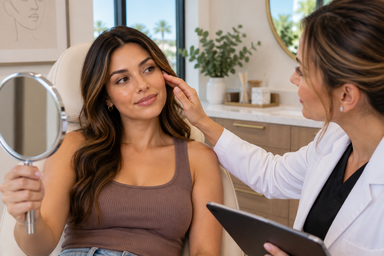
If you are new to injectables, the process is far less intimidating than most people expect. A provider will look at your specific facial movement, ask about your goals, and map out which muscles are contributing to the lines you are concerned about. Treatment itself typically takes fifteen to twenty minutes, with results appearing gradually over three to seven days and lasting an average of three to four months.
For patients who are still deciding between Botox and other neuromodulator options, it can help to understand how Botox and Dysport compare, since both work in similar ways but can feel slightly different depending on your goals and how quickly you want to see results.
Building a Long Term Plan, Not a One Time Fix
The patients who get the most out of preventative Botox tend to treat it as one part of a bigger picture rather than a single fix. Pairing it with consistent sunscreen use, a skincare routine suited to your skin type, and periodic treatments like a chemical peel or dermal fillers for volume as you get older tends to produce far more natural, long lasting results than relying on any single treatment alone.
This is also where working with an experienced team matters. The providers at Skin Ritual take time to understand each patient's facial anatomy and expression patterns before recommending a plan, which is part of why so many patients return year after year. You can see real examples of that approach in the before and after gallery and hear directly from patients in the reviews.
Frequently Asked Questions
Is 25 too young to get Botox? Not necessarily. Many patients in their mid twenties start with a light, preventative approach if they are noticing early lines that stay visible at rest. The right age depends on your skin and expressions, not a specific number.
Will Botox make my face look frozen if I start young? Not when it is done conservatively. A lighter dose focused on prevention is meant to soften future lines while keeping natural movement and expression.
How long does Botox last for younger patients? Most patients see results for three to four months, though some younger patients with lighter dosing find they can space out appointments a bit further apart.
Can I combine Botox with other treatments? Yes. It is common to pair Botox with skin quality treatments like microneedling or a chemical peel, especially for patients who want to address both fine lines and overall skin texture.
How do I know if I need Botox or just better skincare? If lines only show up when you are actively making an expression and disappear at rest, skincare and sun protection may be enough for now. If a line is visible even when your face is relaxed, that is usually a sign Botox could help.
Ready to talk through whether preventative Botox makes sense for you? Schedule a consultation with the Skin Ritual team in Gilbert, Arizona and get a plan built around your skin, not a trend.
Updated September 2026
Not a Trend, Just Good Timing
Starting Botox earlier isn't about chasing a filtered version of yourself. It's about noticing what your face is telling you and deciding, on your own terms, whether now is the moment to listen.