Microneedling or HydraFacial: Which Helps Sun-Damaged, Dehydrated Skin More in Gilbert's Desert Climate?


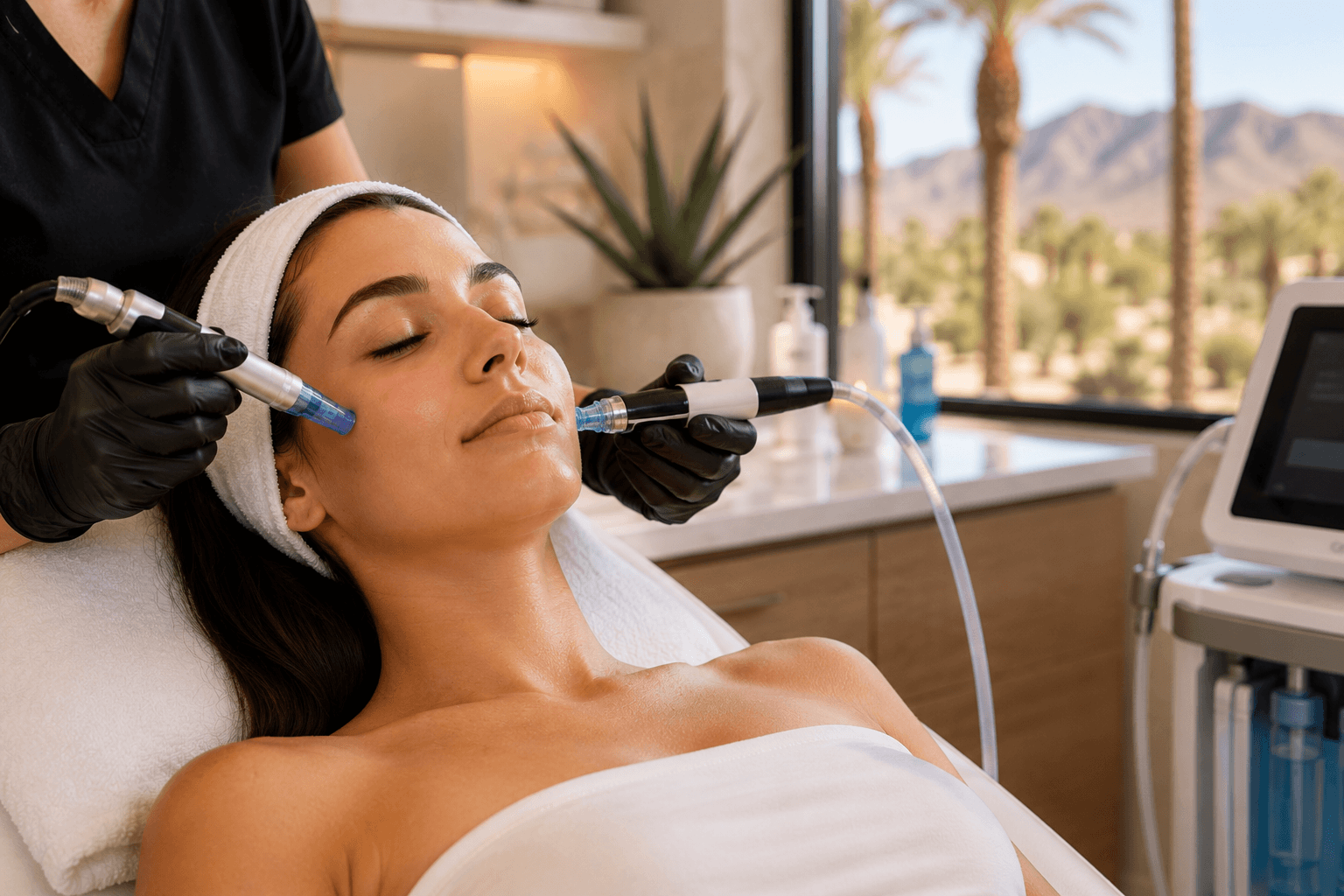
Living in Gilbert means dealing with a very specific kind of skin stress. Between the intense sun for most of the year and the low humidity that pulls moisture out of everything, it is no surprise that sun damage and dehydration show up on so many people's skin here earlier than they might somewhere else. Two of the most popular treatments for addressing this are microneedling and HydraFacial, and patients often ask which one actually makes more sense for desert skin specifically. Updated for July 2026, here is how they compare when sun exposure and dryness are the main concern.
Why Does Gilbert's Climate Make Skin More Prone to Dryness and Sun Damage?
Arizona sun is strong nearly year round, and UV exposure accelerates the breakdown of collagen while also triggering excess pigment production, which is what leads to sun spots and uneven tone over time. On top of that, the low humidity levels common in the desert pull moisture from the skin's surface faster than it can be replaced, which weakens the skin barrier and leaves it more reactive and dull.
Together, these two factors create a combination that a lot of skincare routines designed for other climates simply are not built to handle. That is part of why so many Gilbert residents end up looking into professional treatments rather than relying on over the counter products alone.
How Does Microneedling Address Sun Damage Differently Than HydraFacial?
Microneedling works below the surface. By creating controlled micro-injuries, it stimulates new collagen production, which over several weeks helps rebuild the structural support that sun damage has weakened. This makes it particularly effective for textural sun damage, like rough patches, enlarged pores from years of sun exposure, and fine lines that have started to set in.
HydraFacial takes a different approach entirely. It is a multi-step treatment that cleanses, exfoliates, extracts debris, and infuses the skin with hydrating serums, all in one session with no downtime. For sun damage that shows up mainly as dullness, dehydration, and surface texture rather than deeper structural change, HydraFacial delivers a noticeably brighter, more hydrated result almost immediately.
In short, microneedling rebuilds from within, while HydraFacial refreshes and hydrates from the surface.
Which Option Works Faster for Dehydrated Skin?
If dehydration is your primary concern, HydraFacial is going to give you a faster, more visible improvement. The treatment infuses the skin with hyaluronic acid and other hydrating ingredients during the session itself, so most people leave with noticeably plumper, more hydrated looking skin the same day.
Microneedling can also improve hydration over time by strengthening the skin barrier as new collagen forms, but the results build gradually rather than showing up immediately after a single visit. If you need a quick refresh before an event, HydraFacial is typically the better choice. If you are working on a longer term improvement to how your skin handles dryness overall, microneedling offers more lasting structural change.
Can You Combine Both Treatments Into One Routine?
Many patients in Gilbert actually do combine the two rather than choosing one over the other permanently. A common approach is scheduling microneedling sessions periodically to build collagen and improve texture, while using HydraFacial in between as a maintenance treatment to keep skin hydrated and glowing, especially during the hottest, driest months of the year.
This combination tends to work well because the two treatments are not competing for the same result. One is addressing the deeper structure of the skin, and the other is managing the surface level effects of the climate day to day.
Which One Should You Start With?
If your main frustration is dullness, dryness, or wanting a quick pick-me-up before an event, start with HydraFacial. If you are more focused on longer term improvement to sun damage, texture, or early fine lines, microneedling is likely the stronger starting point. A consultation can also help clarify which concern is actually driving how your skin looks and feels, since sun damage and dehydration often overlap and can be mistaken for one another.
Does the Time of Year Change Which Treatment Makes Sense?
Gilbert's seasons, while milder than many parts of the country, still shift enough to affect which treatment makes more sense at a given time. During the hottest summer months, when sun exposure and sweat can make skin feel more reactive, many patients lean toward HydraFacial for its gentle, no-downtime hydration boost. It fits well into a season when avoiding extended sun exposure after a more intensive treatment can be genuinely difficult.
Cooler months, roughly fall through early spring, tend to be a more practical window for microneedling, since the lower sun intensity makes the short recovery period and necessary sun avoidance easier to manage. Planning treatments around the calendar this way is a simple adjustment that a lot of patients do not think about until a provider points it out.
What Should Your At-Home Routine Look Like Between Sessions?
Whichever treatment you choose, what you do between appointments plays a real role in how long results last. A consistent routine built around a gentle cleanser, a barrier-supporting moisturizer, and daily broad spectrum sunscreen goes a long way in a climate like Gilbert's, where UV exposure is a near constant factor rather than a seasonal concern.
Adding a hydrating serum with hyaluronic acid can help maintain the plumping effects of HydraFacial between visits, while antioxidant serums such as vitamin C can support the collagen building work microneedling is doing beneath the surface. Neither treatment works in isolation from your daily habits, so pairing in-office care with the right at-home routine tends to produce the most noticeable, lasting improvement.
Frequently Asked Questions
Does HydraFacial help with sun spots? HydraFacial can improve overall brightness and surface tone, but for deeper pigmentation from sun damage, microneedling or targeted treatments tend to make a more noticeable difference.
Is microneedling too intense for very dry skin? Not at all, as long as the skin barrier is properly supported afterward with hydration and sun protection, which your provider will guide you through.
How often should I get a HydraFacial in a dry climate like Gilbert? Many patients schedule HydraFacials monthly, especially during the hottest and driest parts of the year, to maintain hydration and glow.
Can I do microneedling and HydraFacial in the same month? Yes, though they are typically spaced a couple of weeks apart rather than done back to back, to give the skin time to recover between treatments.
Which treatment has less downtime? HydraFacial has essentially no downtime, while microneedling typically involves a day or two of redness and mild sensitivity.
The Desert Skin Verdict
Neither treatment is universally better than the other. It really comes down to what your skin needs most right now, quick hydration and glow, or deeper structural repair from years of sun exposure. The good news is you do not have to guess on your own.
You can explore microneedling treatments and HydraFacial MD side by side, or check out how each one specifically addresses sun damage and dehydrated skin before deciding which direction fits your goals best.