Which Option Fits Your Hair Goals?


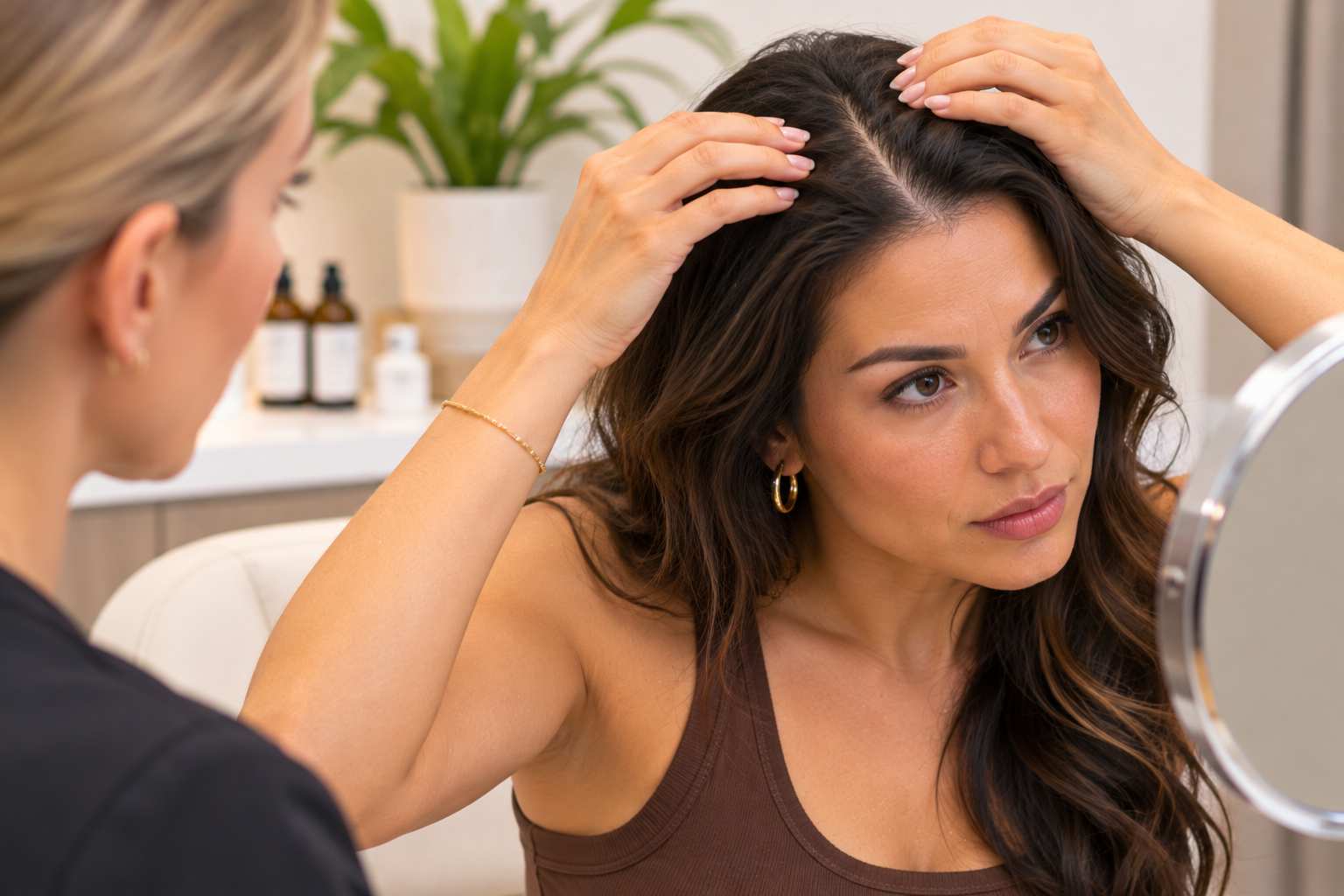
Maybe it started with a wider part than you remember. Or more strands in the shower drain, a thinner ponytail, or a crown that looks a little more see-through under the bathroom light. Hair changes can feel personal and unsettling, and they often send people searching late at night for answers.
Two treatments that come up again and again are PRP and PRF. Both use your own blood, both are injected into the scalp, and both aim to support healthier, fuller-looking hair. So what is the difference, and how do you know which one might fit you?
This guide explains how PRF and PRP compare for thinning hair, what the research says, who tends to consider each option, and why a proper evaluation always comes first.
What Is the Difference Between PRF and PRP?
PRP (platelet-rich plasma) and PRF (platelet-rich fibrin) are both made from a small sample of your own blood, processed to concentrate platelets and growth factors. The main difference is how they are prepared, which affects the final product's consistency and how it is described as releasing growth factors.
Here is a simple way to think about it:
- PRP is processed to separate a concentrated plasma layer rich in platelets. It is typically a liquid that is injected into the scalp.
- PRF is generally prepared with a gentler spin and without the additives commonly used in PRP preparation. This allows a natural fibrin network to form, which is often described as releasing growth factors more gradually.
At Skin Ritual, we offer both PRP Hair Restoration and PRF. Both are listed as options on our Hair Thinning, Slow Hair Growth, and Scalp pages.
How Does PRP Hair Restoration Work?
PRP Hair Restoration involves drawing a small amount of blood, processing it to concentrate the platelets, and injecting the platelet-rich plasma into areas of the scalp where hair is thinning. The growth factors are intended to support weakened follicles and help strengthen existing hair.
At Skin Ritual, PRP is offered for men and women with thinning hair, early hair loss, or weakened follicles who want a nonsurgical option. Visible results typically appear after a few sessions, with the full effect developing over the following months. Results can last several months to over a year, and maintenance sessions are recommended.
What Does the Research Say About PRP for Hair?
PRP for hair has been studied most in pattern hair loss, also called androgenetic alopecia. A 2023 systematic review and meta-analysis of randomized controlled trials published in the Journal of Cutaneous Medicine and Surgery evaluated PRP for this type of hair loss. Overall, research is encouraging, but results vary from person to person, and protocols differ between studies.
It is also important to know that PRP for hair loss is not FDA-approved. It is a treatment option that a provider may recommend after evaluating your hair and scalp.
How Does PRF Work for Thinning Hair?
PRF is prepared from your own blood and injected into targeted areas to support tissue regeneration. Skin Ritual's PRF service lists hair restoration among its uses, alongside skin rejuvenation.
PRF results may be noticeable within weeks to months and typically last several months to a year, with maintenance recommended. Research on PRF for hair is promising but still developing, and it has not been studied as extensively as PRP. Your provider will explain how PRF might fit into your plan and what realistic results look like.
Is PRF or PRP Better for Thinning Hair?
Neither one is automatically better for everyone. PRP has a larger body of research for pattern hair loss, while PRF is a newer approach that some providers may recommend based on a patient's goals and scalp evaluation.
The right choice depends on factors like:
- The pattern and cause of your hair thinning
- How long you have noticed changes
- Your health history and any medications
- Your comfort with injections and maintenance sessions
- Your provider's assessment after a consultation
Many people find that the most important decision is not PRF versus PRP, but starting with a clear understanding of why their hair is thinning in the first place.
Why Is a Medical Evaluation So Important Before Treatment?
Hair thinning has many possible causes, and some need medical care rather than, or in addition to, cosmetic treatment. A proper evaluation helps make sure you are treating the right problem.
According to Mayo Clinic, the most common cause of hair loss is hereditary pattern hair loss, but hormonal changes, thyroid problems, certain medications, major stress, and autoimmune conditions can also play a role. Mayo Clinic also notes that sudden hair loss can signal an underlying medical condition.
See a physician or dermatologist if you notice:
- Sudden, rapid, or patchy hair loss
- Hair loss with other symptoms, such as fatigue, weight changes, or scalp pain
- A receding hairline in women
- Redness, scaling, or scarring on the scalp
PRP and PRF are cosmetic options for thinning hair. They are not treatments for scarring hair loss, patchy hair loss conditions, or underlying medical causes.
How Do Women Approach PRF and PRP for Hair Thinning?
Many women first notice a widening part, thinning at the crown, or less volume overall. These changes can be emotional, especially because hair is so tied to how many women feel about their appearance.
Women's hair changes can be linked to genetics, hormonal shifts, stress, nutrition, or medical conditions, so an evaluation is especially important. Once medical causes are addressed or ruled out, PRP or PRF may be part of a plan to support fuller-looking hair. Your provider can also discuss realistic timelines, since hair grows slowly and changes take months to show.
What Should Men Know About PRF and PRP for Hair?
Men often notice thinning at the temples, a receding hairline, or a thinning crown, which are common signs of pattern hair loss. PRP and PRF may help support thinning hair, particularly when treatment starts early.
Many men in Gilbert, Mesa, and Chandler explore these options because they prefer a nonsurgical approach. Earlier treatment tends to offer better results, because follicles that are weakened but still active may respond better than areas that have been thin for a long time. Your provider can help you set expectations based on your hair pattern.
Can Stress and a Busy Lifestyle Affect Thinning Hair?
Yes. High stress and poor sleep can disrupt the hair growth cycle and increase shedding. For busy professionals, that can create a frustrating cycle where stress about hair loss adds even more stress.
Stress-related shedding often appears months after a stressful event, and it may improve as stress is managed. If you have recently been through a major life change, an illness, or a period of intense stress, talk with a physician about what you are noticing. PRP or PRF may be considered as part of a broader plan that also supports sleep, nutrition, and stress management.
What Should You Expect During and After Treatment?
Both treatments start with a simple blood draw, followed by processing and injections into the scalp. Most people feel mild tenderness or pressure at the injection sites.
Before treatment, avoid blood thinners and anti-inflammatory medications as directed by your provider, but never stop a prescribed medication on your own. Talk with your prescribing doctor first. For PRF, your provider may also recommend avoiding alcohol beforehand.
After PRP Hair Restoration, avoid pressure, massage, strenuous exercise, and washing the area for at least 24 hours. Mild swelling, tenderness, or pressure usually subsides within a day. Your provider will give you specific instructions for PRF aftercare as well.
At Skin Ritual, treatments are performed by trained medical professionals at a practice with a physician medical director, Matthew Woods, MD, FAAD.
Frequently Asked Questions About PRF vs PRP for Hair
Is PRF or PRP better for hair loss?
Neither is automatically better. PRP has more research behind it for pattern hair loss, while PRF is a newer option. Your provider will recommend the one that fits your needs.
How many PRP sessions do I need for thinning hair?
Visible results typically appear after a few sessions, and maintenance is recommended. Your provider will create a schedule based on your hair.
When will I see results from PRP or PRF for hair?
Hair grows slowly, so changes usually take a few months to become noticeable.
Are PRP and PRF painful?
Most people feel mild tenderness or pressure at the injection sites. Your provider will help keep you comfortable.
Is PRP for hair loss FDA-approved?
No. PRP for hair loss is not FDA-approved, though it is widely used and studied for pattern hair loss.
Can PRP or PRF help women with thinning hair?
Yes, both men and women may be candidates. Women should have an evaluation first, since hair thinning can have hormonal or medical causes.
Fuller Strands, Clearer Answers, and a Scalp-First Ritual
When it comes to PRF vs PRP for thinning hair, the most useful starting point is understanding what is behind your hair changes. PRP has a stronger research base for pattern hair loss, PRF offers a newer regenerative approach, and both work gradually over months with consistent care.
If you are ready to talk about your hair goals, the team at Skin Ritual in Gilbert is here to help. Book a consultation online, call 480.702.2442, text 480.418.2552, or reach us through our Contact page. We welcome patients from Gilbert, Chandler, Mesa, Queen Creek, and across the East Valley.