Is a Beauty Spa Facial Enough, or Is It Time for a Medical-Grade Facial?


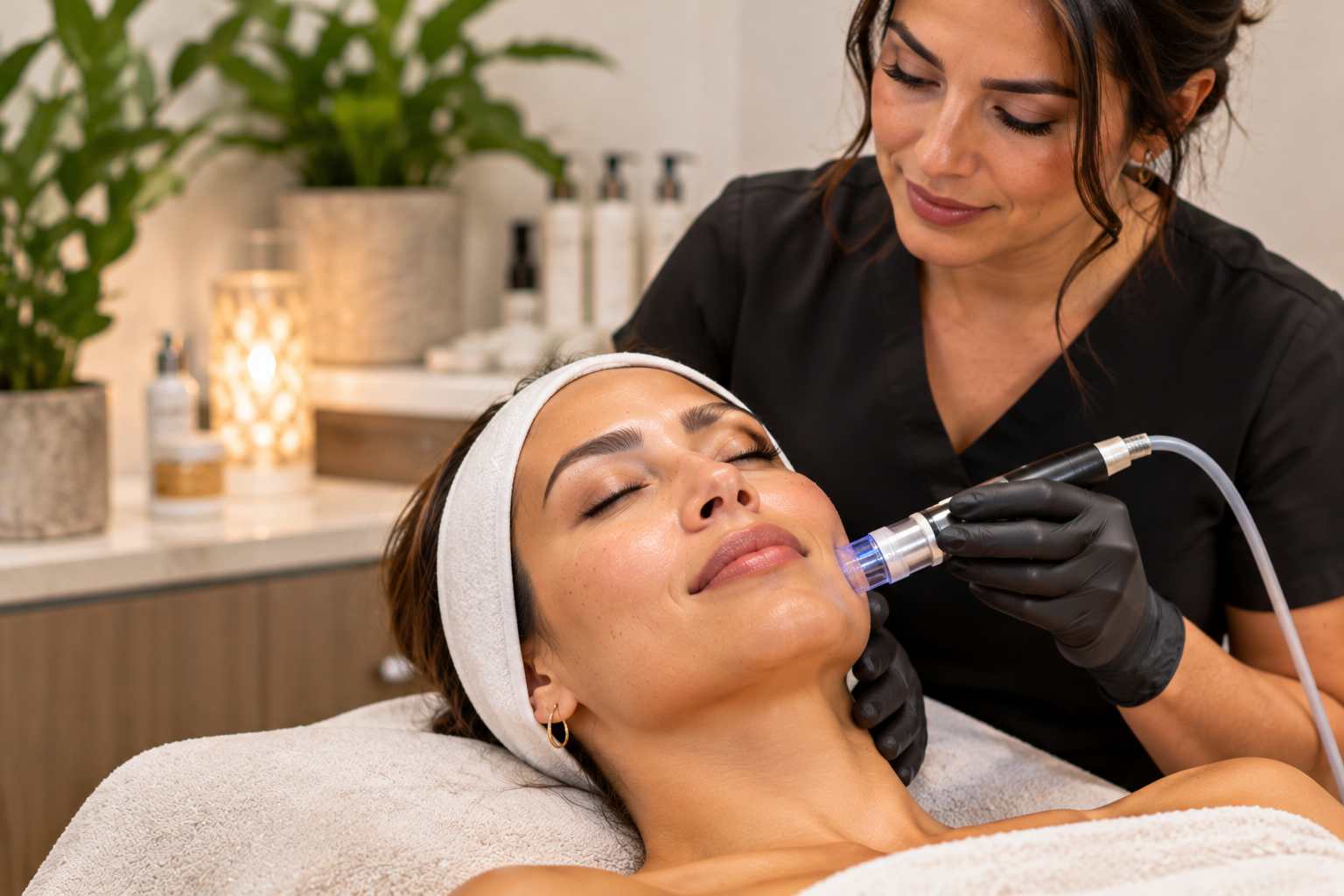
There is a lot to love about a classic beauty spa facial. The warm towels, the soft music, the hour where nobody needs anything from you. For many people in Gilbert, it is a well-earned escape from packed calendars and triple-digit afternoons.
But maybe you have noticed that the glow fades within a day or two. Your pores still feel clogged, your skin still feels tight from the dry desert air, and the dullness creeps back by the following week. That is often the moment people start asking whether a regular spa facial is enough, or whether their skin needs something more targeted.
This guide explains how a relaxing beauty spa facial differs from a medical-grade facial, which concerns each one tends to address, and how to decide what fits your skin, your schedule, and your goals.
What Is the Difference Between a Beauty Spa Facial and a Medical-Grade Facial?
A traditional beauty spa facial typically focuses on relaxation, cleansing, and surface-level pampering. A medical-grade facial uses specialized devices and professional techniques to exfoliate, extract, and infuse targeted serums, with treatment customized to specific skin concerns.
Both have value. A spa facial can be a lovely self-care ritual. A medical-grade facial is designed to address concerns like congestion, dullness, dehydration, and uneven texture in a more structured, results-focused way.
At Skin Ritual, a physician-directed med spa in Gilbert, our facials are performed by licensed aestheticians in a modern, relaxing setting. That means you still get the calm, restorative experience you love, along with a treatment plan built around what your skin truly needs.
If you want a broader comparison of the two settings, our article on the difference between a beauty spa and a medspa covers it in more detail.
Which Medical-Grade Facials Does Skin Ritual Offer?
Skin Ritual offers three medical-grade facials: Hydrafacial MD, DiamondGlow, and Glacē™. Each combines cleansing, exfoliation, extraction, and serum infusion, and your aesthetician helps choose the right one at your consultation.
Hydrafacial MD
Hydrafacial MD uses vortex technology to cleanse, exfoliate, and extract impurities, then infuses serums including peptides, antioxidants, and hyaluronic acid. It is often chosen for dull skin, uneven tone and texture, congestion, clogged pores, and dryness. Treatment takes about 50 to 60 minutes, and monthly appointments are often recommended.
DiamondGlow
DiamondGlow uses a diamond-tip wand to exfoliate, extract, and infuse serums in one step. Serum options include Ultra Hydrating, Skin Brightening, and Pore Clarifying, chosen to match your skin. It is a good fit for dryness, rough texture, dullness, and uneven tone.
Glacē™
Glacē™ is a device-based infusion facial for the face and neck. It includes cleansing, device exfoliation, gentle extraction, and customized brightening and hydrating serums. Many clients schedule it every four to six weeks for ongoing radiance and barrier support.
How Do You Know a Regular Facial Is Not Enough Anymore?
If your skin concerns return quickly after a spa facial, or if you are dealing with persistent congestion, dullness, or dehydration, it may be time for a more targeted approach. A medical-grade facial is designed to address the cause of these concerns rather than just soothe them for a day.
Common signs include:
- Blackheads and clogged pores that come back within days
- Skin that feels tight and dry no matter how much moisturizer you use
- A dull, tired look that makeup cannot quite cover
- Rough texture that makes foundation sit unevenly
- A sense that you are spending money on facials but not seeing lasting change
You can explore these concerns further on our Dull Skin, Dehydrated Skin, and Congestion and Blackheads pages.
How Does the Arizona Climate Affect Your Facial Choice?
Gilbert's very low humidity, dry heat, and intense year-round sun can leave skin dehydrated, tight, and dull. Summer heat and monsoon humidity can also increase sweat and congestion. A facial that combines deep cleansing with hydration can help skin keep up with the desert.
Because the climate changes so much through the year, many clients adjust their facial focus by season. In the hotter months, pore-clearing and congestion care may take priority. In the cooler, drier months, hydration and barrier support often come first. Your aesthetician can adapt your treatment as the seasons change.
Which Facial Fits Your Lifestyle?
The right facial depends on your skin, but your schedule, priorities, and expectations matter too. Here is how different clients often approach it.
Busy Professionals Who Need Results in Under an Hour
When your calendar is packed, you want every minute to count. Medical-grade facials typically take 45 to 60 minutes and have minimal downtime, so many professionals book them around lunch or at the end of the workday. Most people return to normal activities the same day, with only mild pinkness or slight redness that usually fades quickly.
Gen Z and Younger Adults Building Good Habits Early
Younger clients often deal with congestion, oiliness, and occasional breakouts, and many are interested in building a consistent routine early. A medical-grade facial, paired with professional guidance on home care, can be a helpful foundation. Persistent, painful, or cystic acne should be evaluated by a physician or dermatologist.
Luxury Clients Who Want Both Pampering and Results
For clients who value an elevated experience, medical-grade facials offer two things at once: a calm, polished setting with treatments designed around measurable skin goals. Many choose to make facials part of an ongoing plan through our Ritual Membership.
Men Who Want Clearer, Less Oily Skin
Men often have oilier skin and larger pores, and many prefer a straightforward routine. A medical-grade facial can help deep-clean pores, reduce the look of congestion, and leave skin feeling refreshed without a complicated multi-step process.
Can a Medical-Grade Facial Work for Sensitive Skin?
Medical-grade facials can often be customized for sensitive skin after an assessment by a licensed aesthetician. Your provider will review your skin, any recent treatments, and the products you use before recommending a facial.
Before your appointment, let your provider know about any skincare actives, recent sun exposure, or skin conditions. For Hydrafacial MD and DiamondGlow, you will typically stop retinol or retinoid products 48 hours beforehand and avoid sweating for 24 hours afterward.
No facial is completely free of side effects. Mild redness or pinkness is common and usually resolves quickly. If you have rosacea, eczema, or another skin condition, your provider will help determine whether a medical-grade facial is appropriate.
How Can You Make Your Facial Results Last Longer?
Consistency and home care make a big difference. A medical-grade facial gives your skin a strong reset, while daily habits help maintain the results between visits.
A few helpful habits:
- Wear broad-spectrum sunscreen every day, even on cloudy or cooler days.
- Use medical-grade skincare recommended by your aesthetician. Skin Ritual's shop carries ZO Skin Health, Skinbetter Science, and Alastin Skincare.
- Stay hydrated and use a moisturizer suited to the desert climate.
- Schedule facials consistently rather than only before events.
Frequently Asked Questions About Beauty Spa and Medical-Grade Facials
Is a medical-grade facial more relaxing or more clinical?
At Skin Ritual, medical-grade facials are performed in a calm, modern setting, so you can enjoy a relaxing experience while targeting specific skin concerns.
How often should I get a medical-grade facial?
Many clients book every four to six weeks. Hydrafacial MD is often recommended monthly for ongoing skin health.
Can a medical-grade facial help clogged pores?
Yes. Hydrafacial MD, DiamondGlow, and Glacē™ all include extraction to help clear congestion and debris from pores.
Which facial works well for dry desert skin?
Hydrafacial MD, DiamondGlow with Ultra Hydrating serum, and Glacē™ all focus on hydration. Your aesthetician will recommend the one that suits your skin.
Is there downtime after a medical-grade facial?
Downtime is minimal. Mild redness or pinkness may occur but usually fades quickly.
Can I still get a relaxing facial at a med spa?
Absolutely. Medical-grade facials can be both restorative and results-focused, especially in a calm, welcoming environment.
Pamper Your Skin, Then Actually Change It
A beauty spa facial will always have its place as a moment of self-care. But if you want results that last longer than a day, a medical-grade facial offers a more targeted, customized way to clear pores, restore hydration, and bring back your glow, especially in the Arizona desert.
Ready to find the facial that fits your skin? The licensed aestheticians at Skin Ritual in Gilbert are here to help. Book online, call 480.702.2442, text 480.418.2552, or visit our Contact page. Our office welcomes clients from Gilbert, Chandler, Mesa, Queen Creek, and across the East Valley.